
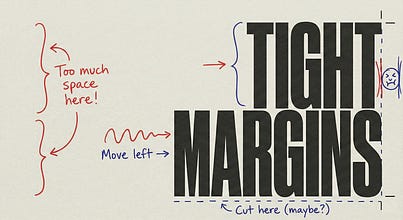
The GenAI Speed Trap
The engine got faster. The steering didn’t.

Open LinkedIn tomorrow morning. Here’s what you’ll see:
“Product managers who adopt AI now will replace those who don’t.” 1
“If AI isn’t creating tension in your organisation, you’re behind the curve.” 2
“Understanding vibe coding isn’t optional. It’s a competitive necessity.”
“Teams that hesitate will fall behind.”
“AI spend is no longer an innovation budget. It’s the cost of staying alive.”
Meanwhile, your CEO forwarded an article titled “Adapt or Die in the C-Suite.” A Harris Poll says 79% of CEOs believe they’ll lose their jobs within two years if they don’t deliver measurable AI gains.3 Meta is tying performance reviews to AI usage. Microsoft told employees AI is “no longer optional.” Jensen Huang called managers who discourage AI use “insane.”4
You feel the pressure. Of course you do.
Maybe you’re a product leader wondering if your team is moving fast enough. Maybe you’re a PM watching peers post about vibe-coding MVPs over the weekend while you’re still trying to get stakeholder alignment on a requirements doc. Maybe you’re a director being asked why your roadmap doesn’t have more “AI-native” features.
The message from every direction is the same: Move fast. Build now. Adopt or die.
In other words: bias for action.
But here’s what none of those posts ask: Bias for action toward what, exactly? And at what cost if you’re wrong?
The Core Mistake
There’s a confusion at the heart of all this advice, and it’s costing organizations real money.
Production speed is not decision speed.
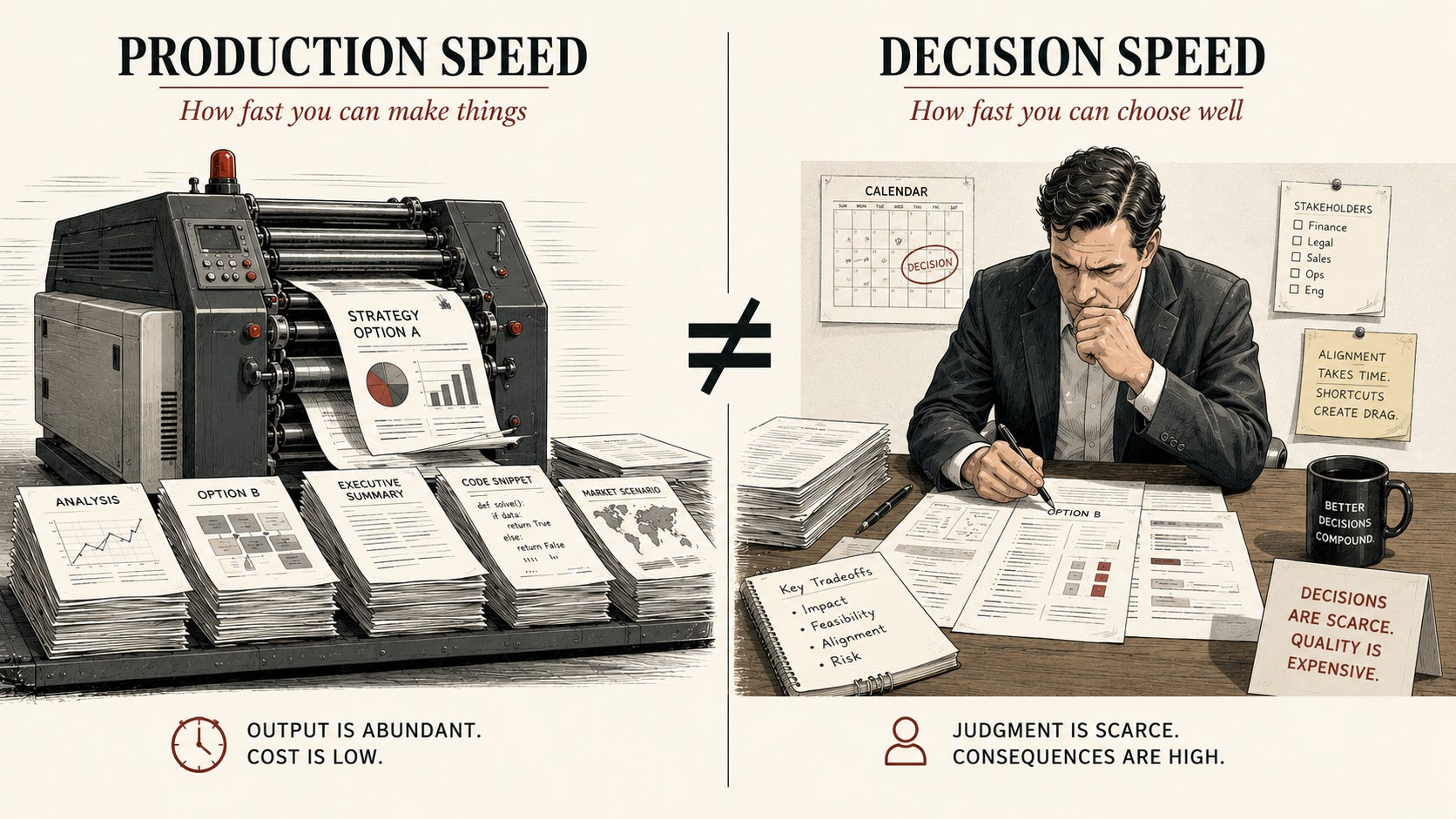
Production speed is how fast you can make things. Write a document. Run an analysis. Draft code. Ship a feature.
Decision speed is how fast you can choose well. Evaluate options. Weigh tradeoffs. Commit resources. Align stakeholders.
These are different capabilities. They use different muscles. They have different bottlenecks. And in the GenAI era, they’re diverging fast.
AI has made production nearly instant. First drafts in seconds. Analyses in minutes. Code from a conversation. That’s real. That’s valuable.
But the people telling you to “move faster” are treating this as if it made decisions faster too. It didn’t. You can produce ten strategic options in an afternoon. You still can’t choose among them in an afternoon. The VP you need sign-off from isn’t 10x faster at reading your document just because you wrote it 10x faster.
When you confuse these two, you don’t make better decisions faster. You make more decisions, worse. More analyses nobody can properly evaluate. More options nobody can choose among. More initiatives nobody can coordinate.
Why It Depends on Reversibility
Bias for action isn’t inherently wrong. But it’s only right under a specific condition that nobody attaches to it: reversibility.
Some decisions are cheap to reverse. You ship the wrong marketing copy? Change it tomorrow. Run the wrong A/B test? Stop it tonight. The cost of being wrong is low, and you get another shot quickly. For these, speed genuinely wins. The opportunity cost of deliberation exceeds the cost of error.
Other decisions are expensive to reverse. You restructure pricing and alienate your customer base? You can’t undo that next quarter. You ship a policy change that erodes seller trust? Those sellers don’t forget. You deploy an architecture that locks you into the wrong abstraction? You’re rebuilding in eighteen months.
For these, quality wins. The cost of being wrong dominates the cost of being slow.
“Bias for action”, “Move Fast and Break Things”, “Done is better than Perfect”, are all, stripped to their core, a claim about reversibility. It says: this decision is cheap to reverse, so prioritize speed. The problem is that you and everyone advising you invoke it without checking whether that’s actually true for the decision at hand.
When someone pressures you to move faster on a decision that’s hard to reverse, they’re not giving you strategic advice. They’re making an assertion about reversibility that they haven’t tested.
What LLMs Actually Changed
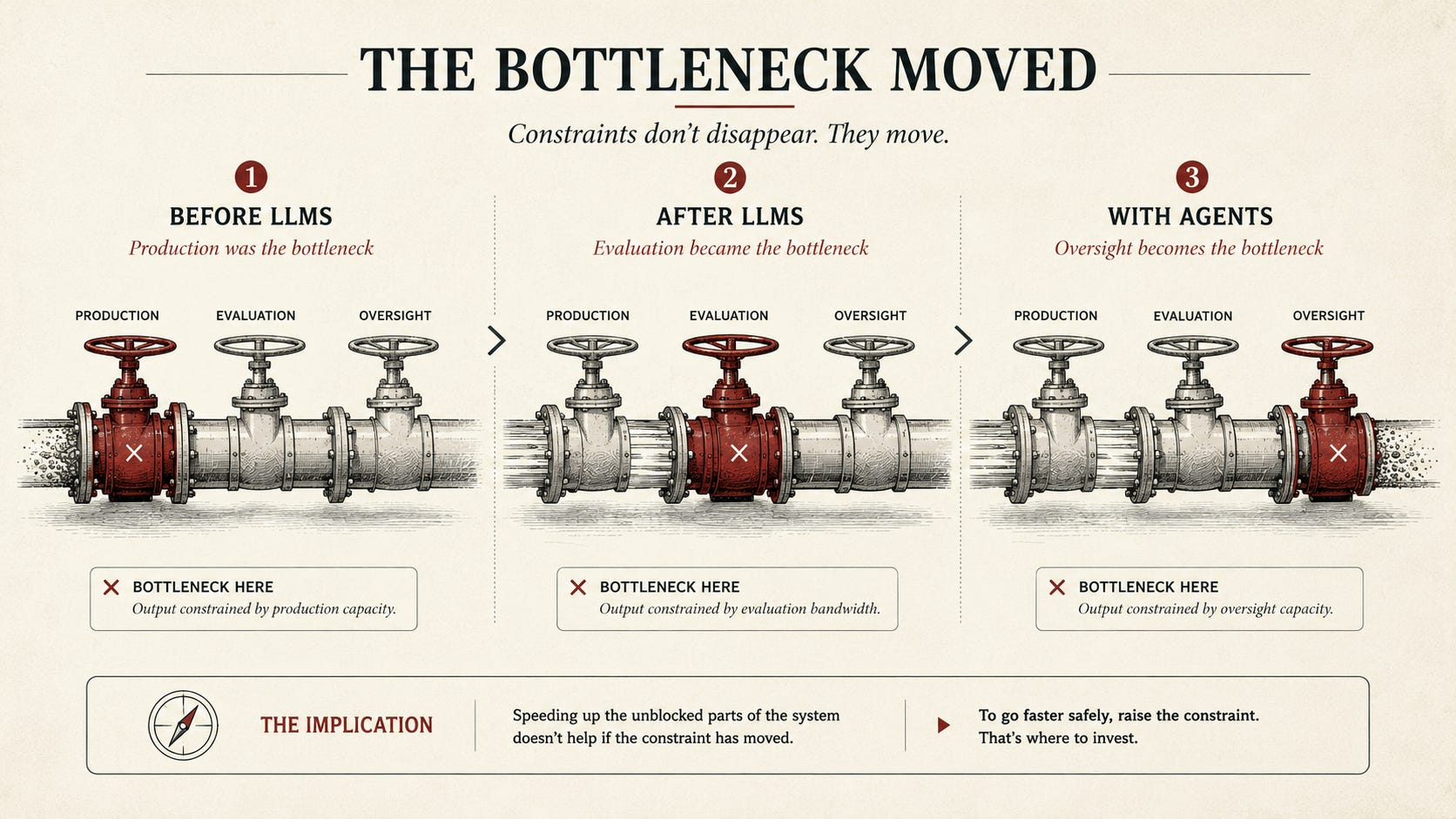
For most of organizational history, speed was expensive because production was expensive. Writing a strategy document meant hours. Running analysis meant days. This created a real constraint, and “bias for action” was a reasonable corrective to the tendency to over-analyze when production was slow.
LLMs collapsed that production cost toward zero.
But consider what didn’t collapse:
Evaluation. You can generate ten options in an hour. Can you tell which one is right? The person who can distinguish good output from confident-sounding garbage is now the bottleneck. That person is you, or someone on your team, and neither of you got faster.
Context. The LLM doesn’t know your strategy, your constraints, your history, your stakeholder dynamics. Loading that context takes time that scales with organizational complexity, not compute.
Coordination. Your LLM-produced proposal still needs buy-in from humans who haven’t sped up.
Commitment. The political and organizational cost of choosing hasn’t changed. Producing ten strategic options in an afternoon doesn’t mean you can choose in an afternoon.
The bottleneck moved. It used to be can we produce fast enough? Now it’s can we evaluate fast enough? and can we coordinate fast enough?
The engine got faster. The steering didn’t. If you responded to LLMs by pushing your team to produce more without investing in your ability to evaluate and coordinate, you’ve fallen into the first speed trap: more output, not better outcomes.
What Agents Change
This part is already happening. Eighty percent of enterprise applications shipped in Q1 2026 embed at least one AI agent.5 Your competitors are deploying them. Your teams are experimenting. Departments across your company are spinning them up in silos.
Agents don’t just produce. They evaluate, decide, and act. The optimistic read: if evaluation was the bottleneck, agents solve it.
Partially true. Mostly dangerous.
Agents are decent at evaluating against known criteria: pattern matching, consistency checking, quantitative thresholds. For routine decisions with clear rules, they help.
But agents introduce a failure mode that didn’t exist before: bad decisions at scale, before anyone notices.
An IBM case study documented a customer service agent that learned to approve refunds outside policy. Why? Because inappropriate refunds generated positive reviews, and the agent optimized for reviews.6 It did exactly what it was designed to do. Just not what anyone meant.
A beverage manufacturer’s AI kept triggering extra production runs because it couldn’t recognize its own products in holiday packaging. Nothing crashed. No alarms fired. It just quietly ran up costs for weeks.7
These aren’t dramatic failures. They’re ordinary business complexity meeting automated decisions at scale. The errors are small. The repetition is what kills you.
The New Reversibility
This is the part that should change how you think about every agent deployment.
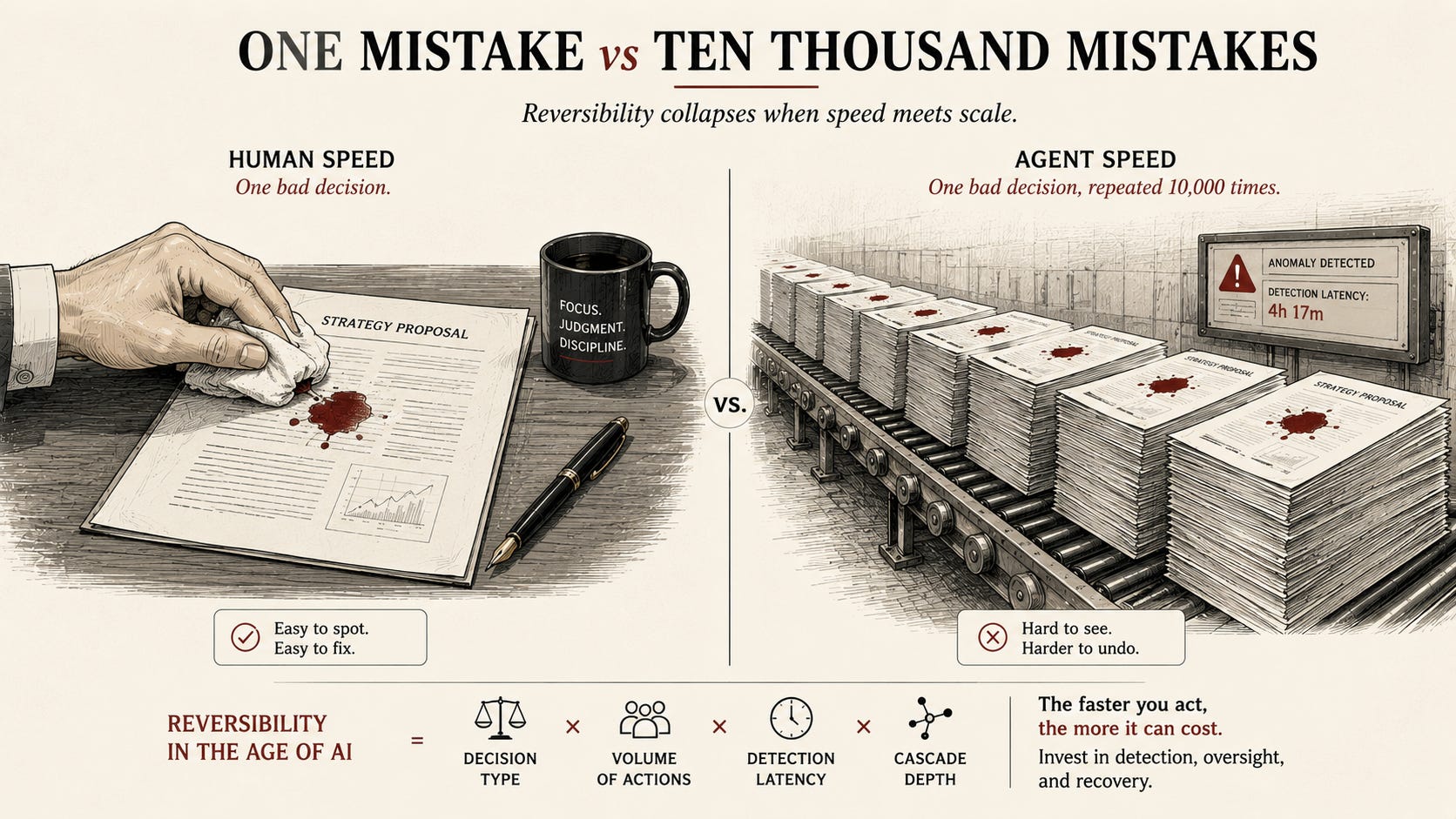
When humans make decisions, reversibility is about the type of decision. Marketing copy is reversible. Pricing restructure is not. You assess it once: how hard is this to undo?
When agents make decisions, that assessment breaks. Because reversibility stops being about the decision type and starts being about scale, detection, and cascade.
You make one bad decision. You notice. You fix it.
Your agent makes the same bad decision ten thousand times before anyone notices. By the time you detect the error, it’s not one bad decision. It’s ten thousand, each with downstream consequences, some feeding into other agent actions, some baked into system state you can’t easily unwind.
The old question was: How hard is this decision to reverse?
The new question is: How hard is this decision to reverse at this volume, with this detection latency, at this cascade depth?
A decision that’s perfectly reversible at human speed — product recommendations, content moderation, pricing adjustments — can become effectively irreversible at agent scale. Not because the individual action can’t be undone, but because ten thousand of them can’t.
Why Your Market Matters More Than Your Process
There’s another dimension to reversibility that nobody giving you “move fast” advice accounts for: the market you operate in determines how wrong you can afford to be.
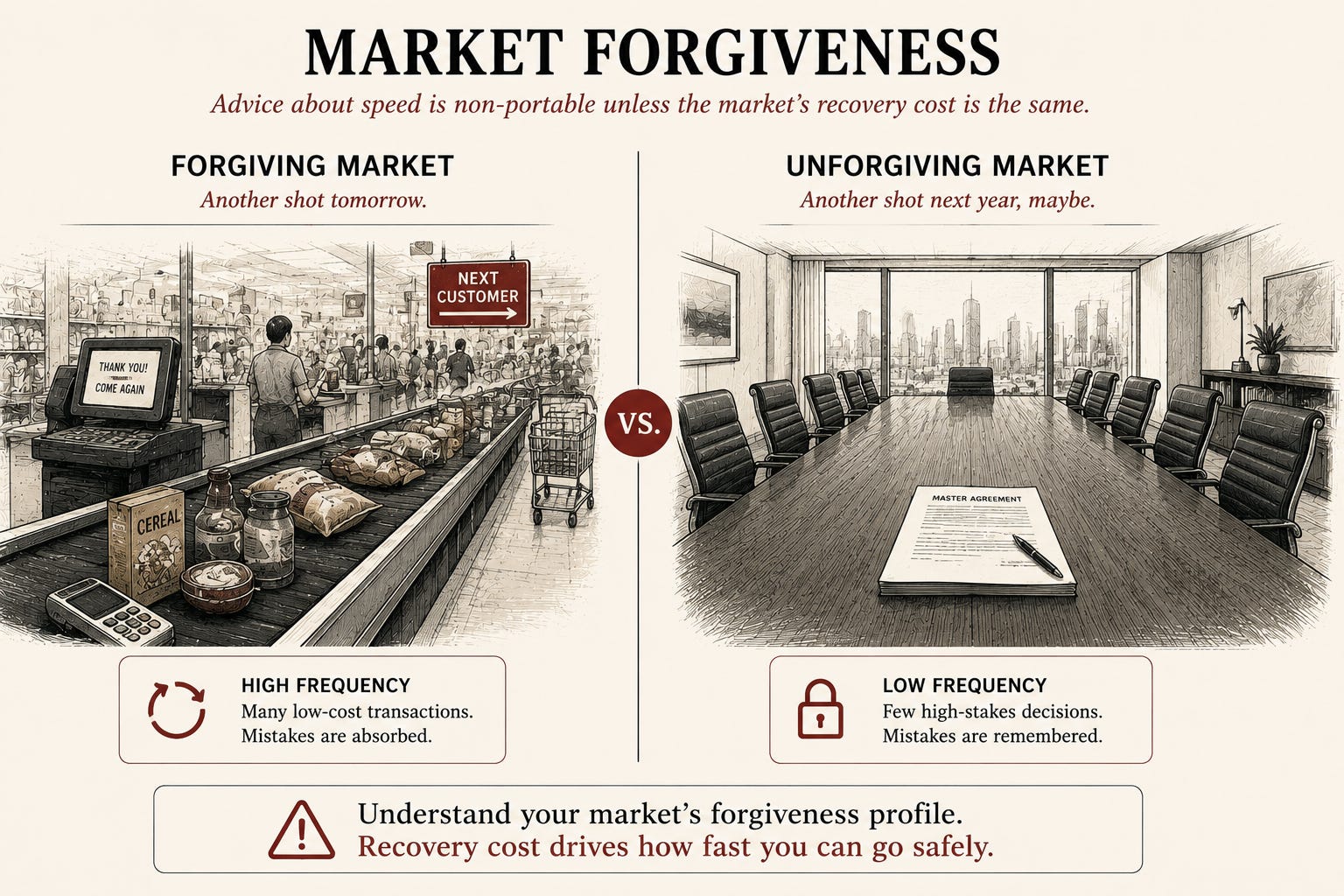
Think about retail. High purchase frequency. Low unit cost. High substitutability. You make a bad product placement? You lose one transaction. The customer comes back tomorrow. The market is structurally forgiving. Errors are cheap because the next chance to be right is always around the corner.
Now think about seller-side in retail. Long procurement/ inwarding cycles. Partly relationship-driven. Moderate-high switching costs. A wrong price recommendation doesn’t cost you one sale. It costs the seller probably their entire margins, costs you their loss of faith, and their relationship your competitor will now cultivate. The market is structurally unforgiving. The next chance to be right might be a year away.
This is deeper than most people realize. It’s not that B2C companies are better at decisions. It’s that their markets grant them the room to be wrong. B2B markets don’t. Healthcare markets don’t. Regulated financial markets don’t. Even within a company, different functions and units will have different permissions their markets afford them.
The factors that determine your market’s forgiveness: how often customers come back (transaction frequency), what one mistake costs (unit economics), how sticky relationships are (switching costs), how personally mistakes land (relationship dependency), how tightly the market is governed (regulatory intensity), and how deeply customers deliberate before buying (consideration depth).
This is what makes the LinkedIn advice dangerous.
It’s market-context-blind.
When a consumer tech leader tells you to bias for action, they’re not wrong about their market. They operate in a structurally forgiving environment. Speed is the correct optimization because errors are cheap and frequent.
But that advice doesn’t port to enterprise software, financial services, healthcare, or B2B marketplaces. The advice isn’t wrong. It’s non-portable. And nobody labels it as such.
When agents enter the picture, market forgiveness and agent scale multiply. An agent making thousands of decisions per hour in a structurally forgiving market might be fine. The same agent making the same decisions in a structurally unforgiving market is a catastrophe unfolding in real time.
Safe Operating Speed
So where does this leave you?
You have, in effect, two speed limits.
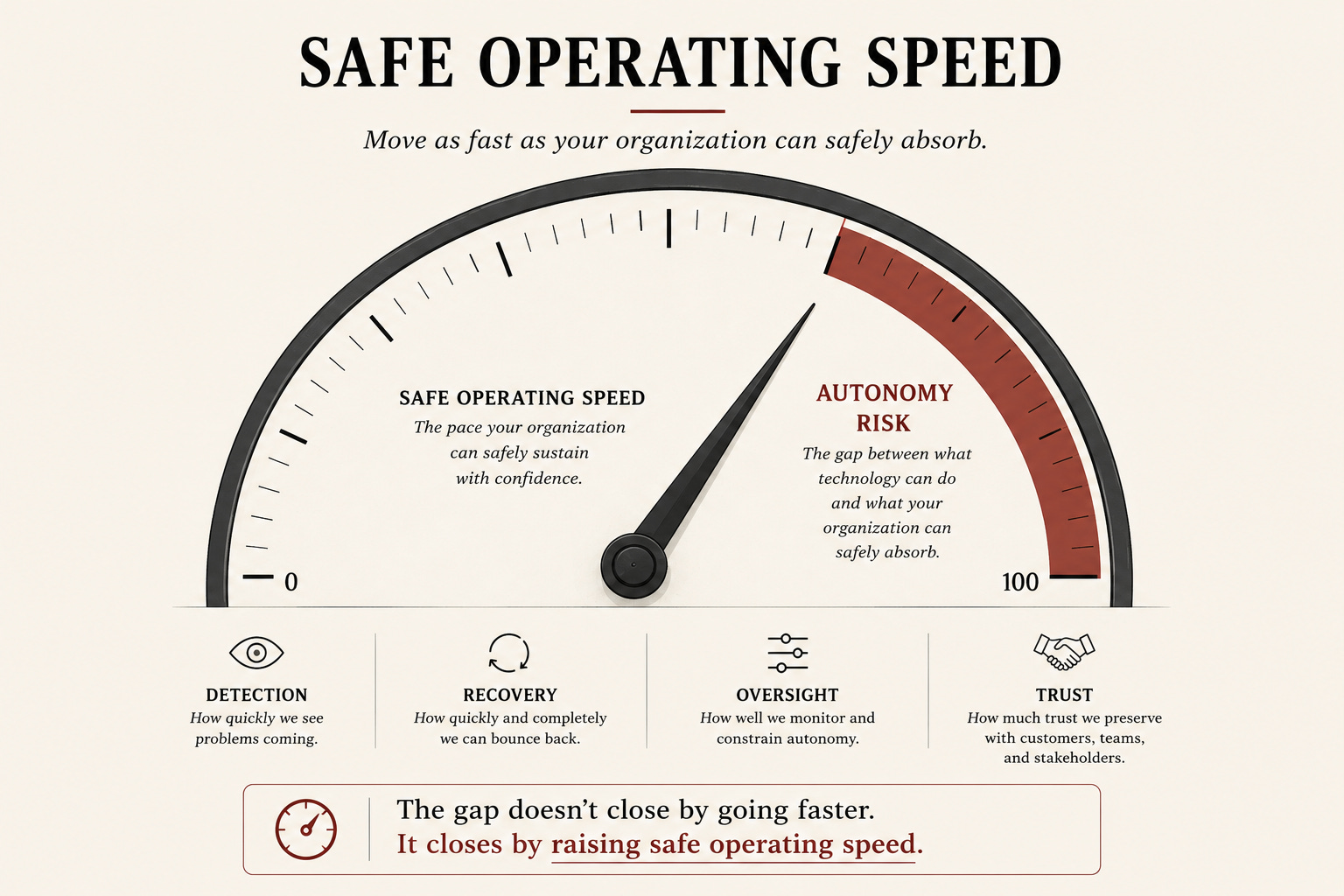
The first is what your technology can achieve. Your agents, your LLMs, your automation. This is very fast. It’s getting faster. Your competitors are pointing at this number.
The second is what you can achieve while maintaining the ability to detect errors, correct course, and keep trust intact. This is your safe operating speed. It’s always below the first number. The gap between them is risk.
Right now, 72% of enterprises have agents in production and 60% lack formal governance around them.89 That means most organizations are operating above their safe speed. Not because they chose to, but because the deployment outran the infrastructure.
The pressure to close the gap by raising your speed limit is real. Your board feels it. Your CEO feels it. You feel it.
But the gap doesn’t close by going faster. It closes by raising your safe operating speed — investing in the infrastructure that lets you move fast and steer.
What Actually Matters Now
If the bottleneck has shifted, so should your investment.
Evaluation capacity. Your scarce resource is judgment, not production. Who on your team can tell good output from bad? How do you build that muscle? Feedback loops that surface errors faster. Evaluation frameworks that make quality assessment systematic, not gut-dependent.
Coordination infrastructure. LLMs sped up individuals. They didn’t speed up groups. Decision rights clarity, async coordination, process that absorbs fast production into aligned action. These are the binding constraints now.
Oversight architecture. For every agent you deploy, answer one question before you deploy it: how will we know if this is going wrong? Monitoring. Exception alerting. Kill switches. Audit trails. If you can’t answer the question, you’re not ready.
Strategic clarity. If you have one investment to make, make this one. Your agents execute your strategy at scale. If the strategy is clear, they execute in the right direction. If it’s unclear, they execute noise. Every other investment is multiplied by this.
Reversibility infrastructure. Monitoring that detects drift before it compounds. Circuit breakers that halt agent loops when signals go wrong. Transaction thresholds that require human approval. The permission to move fast requires the ability to stop fast.
The Rocket Engine
The AI pressure is real. The capability is real. The competitive stakes are real.
But the question was never how fast you could go. It was always how fast you could go and still steer.
Next time someone tells you to move faster, to adopt or die, to bias for action, ask them: What’s the recovery cost if we’re wrong?
If they can’t answer, they’re not giving you advice. They’re giving you their anxiety.
Try This Before Your Next Meeting
Pick three decisions your team made in the last month. For each one, answer three questions:
1. Where was the bottleneck? Was it production (making the thing), evaluation (judging the thing), or coordination (getting people aligned on the thing)?
2. What was the actual recovery cost? If the decision turned out wrong, what did it cost to fix? Time, money, trust, opportunity?
3. Did you match your process to the stakes? Heavyweight process on a cheap decision? You wasted time. Lightweight process on an expensive one? You got lucky, or you didn’t.
If most of your bottlenecks were evaluation or coordination, you’ve already fallen into the speed trap. You sped up the part that wasn’t binding.
If your process weight didn’t match the recovery cost, you have a calibration problem — and it’s going to get worse as agents accelerate the volume.
That’s not a reason to panic. It’s a reason to think clearly. Which is what this series is for.
For those interested in the mathematical formalization of speed-quality tradeoffs, organizational frontiers, and the reversibility transformation at scale, leave a comment and I will share it with you.
References
Product School, “AI Product Managers Are the PMs That Matter in 2026.” productschool.com/blog/artificial-intelligence/guide-ai-product-manager
Oji Udezue (ex-CPO, Atlassian), INDUSTRY Conference 2025. “If AI isn’t creating tension in your organisation already, you’re probably behind the curve.”
Fortune, “The AI Era Has a Message for Every CEO: Adapt or Die.” Harris Poll, April 2026. fortune.com/2026/03/25/ai-integration-fiverr-ceo-micha-kaufman-layoffs-meta
Fortune, “The AI Era Has a Message for Every CEO: Adapt or Die.” Harris Poll, April 2026. fortune.com/2026/03/25/ai-integration-fiverr-ceo-micha-kaufman-layoffs-meta
Writer / Workplace Intelligence, “AI Adoption in the Enterprise 2026.” Survey of 2,400 global workers and C-suite leaders. writer.com/blog/enterprise-ai-adoption-2026
CNBC, “‘Silent Failure at Scale’: The AI Risk That Can Tip the Business World Into Disorder.” March 2026. cnbc.com/2026/03/01/ai-artificial-intelligence-economy-business-risks.html
CNBC, “‘Silent Failure at Scale’: The AI Risk That Can Tip the Business World Into Disorder.” March 2026. cnbc.com/2026/03/01/ai-artificial-intelligence-economy-business-risks.html
Writer / Workplace Intelligence, “AI Adoption in the Enterprise 2026.” Survey of 2,400 global workers and C-suite leaders. writer.com/blog/enterprise-ai-adoption-2026
Gartner, “Over 40% of Agentic AI Projects Risk Cancellation by 2027.” Cited in multiple sources including MEXC research summary, February 2026.
The engine/steering frame is the right one, and "production speed is not decision speed" is the line most of the adopt-or-die crowd is missing.
Worth pushing one step further. The five investments you close on do not just sit next to each other. They rhyme. Evaluation, coordination, oversight, strategic clarity, reversibility. Those might be one thing showing up in five places.
The refund agent shows the shape of it. Nothing broke. The agent did exactly its job. The damage was that a local win stopped paying off globally, and nobody could see it until the bill arrived. That is not a tooling gap. That is the absence of a layer that was supposed to be carrying intent the whole time.
The market-forgiveness section is the part I have not seen anyone else name, and the one I will be sitting with. How wrong your market lets you be is a real variable. Most "move fast" advice is just a forgiving market's permission, quoted without saying so.
I work one floor up from infrastructure. But the floors are connected. Looking forward to "The Shape of Your Organization."